
- Construction consulting
Beyond the estimate.
What actually has to be done.
Reading a property claim line by line and documenting what the file supports.
- THE PROBLEM
Carrier scopes are often priced correctly and built wrong.
A line item can carry the right unit cost and still describe a repair that can’t be performed as written — because the substrate won’t take it, the code won’t pass it, or the sequence doesn’t work. Those are construction questions, and they don’t get resolved by re-pricing.
- What the engagement covers
Construction questions, answered clearly.
Constructability review
Whether the scope as written can be built. Missing substrate preparation, trades that can't be sequenced in the order the estimate implies, repairs that assume access nobody has, and scope that stops at a wall the damage doesn't.
Repair versus replacement
Whether a component can be repaired to a pre-loss condition or has to be replaced. This is where partial-repair scopes most often fail, and it needs a construction answer supported by field conditions rather than an assertion from either side.
Code and ordinance requirements
What the jurisdiction will require at the permit — not what the estimate assumes it will require. Upgrades triggered by the extent of the work, and the distinction between a code requirement and a betterment.
Cause of loss
What happened, in what order, and what the damage pattern supports. Field inspection, documentation of conditions, and a written determination — including when the evidence doesn't support the conclusion someone was hoping for.
Matching and uniform appearance
Whether a reasonable match exists in the market, what a partial replacement would actually look like in place, and how the line between the two falls under the policy language.
Mitigation adequacy
Whether the emergency response was appropriate to the loss, whether the equipment count and duration are supported by the moisture and equipment logs, and whether delay contributed to the secondary damage.
How it pairs with the estimate
One inspection. A complete answer.
Most firms would rather retain one party for the cause and the number than coordinate two. The construction findings and the estimate come from the same inspection and the same set of field notes, which means the scope reflects the determination instead of being reconciled to it afterward.
It also removes a common weakness: an estimator who can price a repair but can’t explain why that repair and not a cheaper one. When the two come from the same person, that answer already exists in the file.
Engagements can be limited to the construction question alone if you already have an estimator you use.
- Deliverables
A clear record you can use.
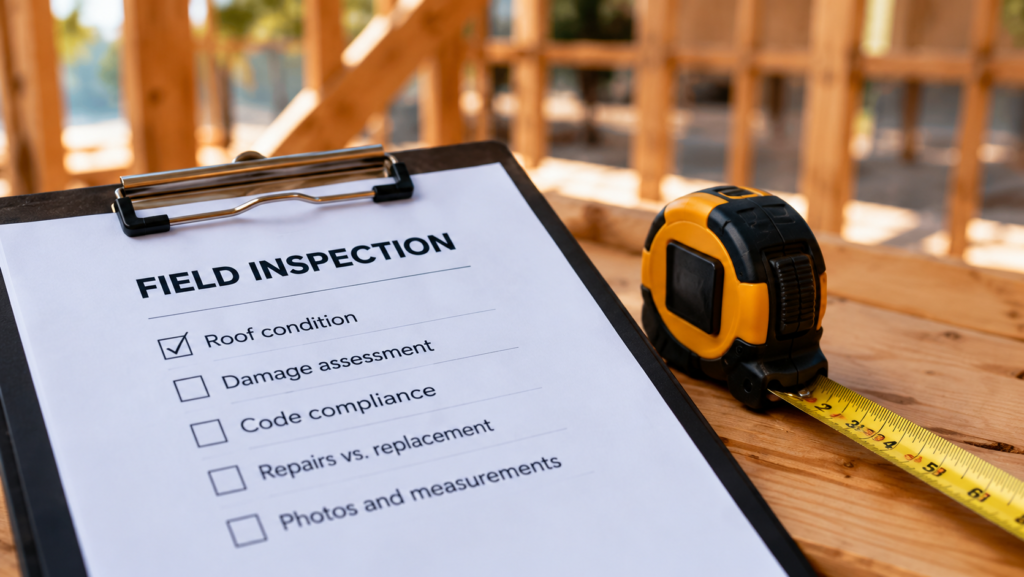
Site inspection
with photographic and measured documentation.
Written determination
stating the conclusion and the basis for it.
Constructability findings
keyed to the scope under review.
Code and ordinance requirements
identified by jurisdiction and section .
Repair-versus-replacement opinion
with supporting field conditions .
Xactimate scope
reflecting the determination, where estimating is also retained.
Where this work is available
Field inspection in Southern California.
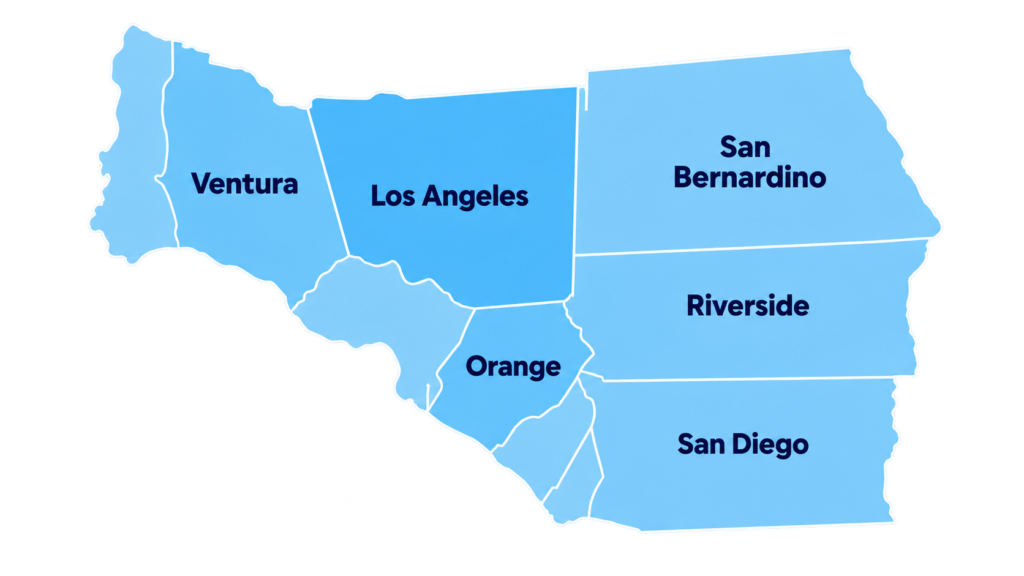
Field inspection requires a site visit, so this service is offered throughout Southern California.
Los Angeles, Orange, Riverside, San Bernardino, San Diego, and Ventura counties. Estimate and scope review remain available nationwide as a desk engagement, since those are performed from the documentation.
- Los Angeles County Orange County Riverside County San Bernardino County San Diego County Ventura County
Have a property to discuss?
Ask about a property.
Describe the file and I’ll let you know how construction consulting can help, or whether another engagement is a better fit.